
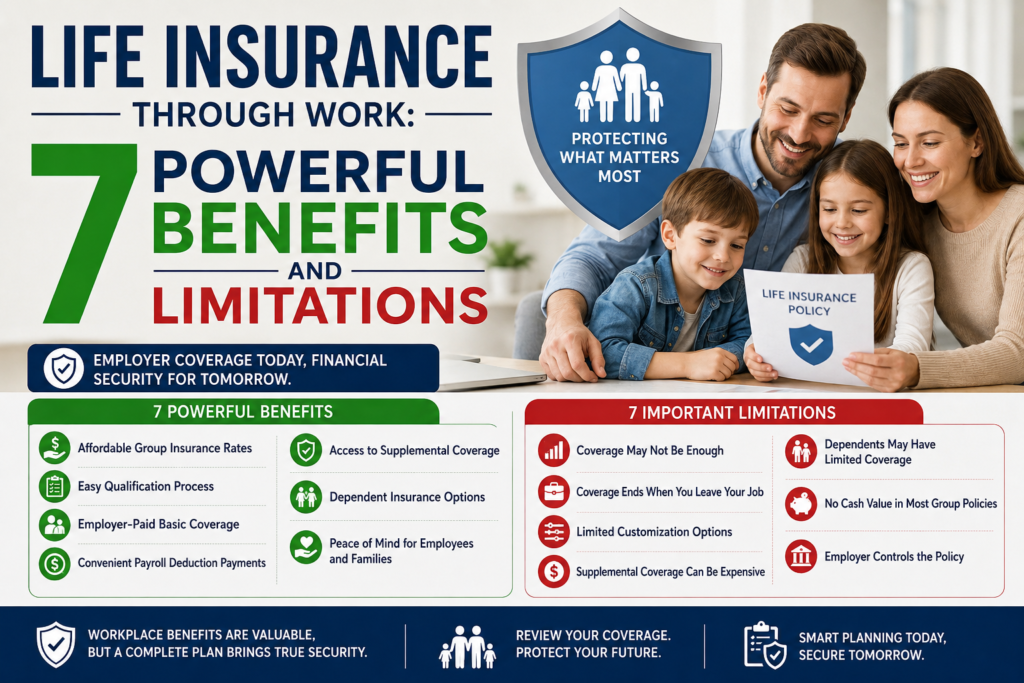
The 7 Great Advantages and Drawbacks of Life Insurance Through Work
Employer-sponsored life insurance in the United States (USA) is rarely discussed. Employer-sponsored life insurance in the USA is rarely discussed.
Life insurance is among the most crucial financial instruments that help family members avoid financial difficulties in the event of unforeseen events. Millions of Americans have life insurance coverage provided through their work as part of their employee benefits package. This type of coverage, known as employer-sponsored life insurance or group insurance, provides inexpensive protection for employees and their families.Although it can be a useful employee benefit, many are not familiar with how it works, what it covers, and whether it is sufficient protection to ensure long-term financial security. Some workers think their employer coverage is enough; others may not realize that certain aspects of their coverage could be restrictive for their families in the future.
We’re going to cover everything you need to know about life insurance through work, from how group life insurance works to the various types that companies can provide you and the eligibility requirements to understand why life insurance through work is offered.
What Is Life Insurance Through Work?
Employer-provided life insurance is a policy that an employer gives to an employee as part of the employee’s benefits. Most of the time, the employer works with an insurance company to provide workers with a discounted group life insurance plan.
Employer-sponsored life insurance is directly associated with your employment, unlike individual policies purchased by individuals. The employer can either pay the premium or deduct it from payroll and return the money to the employee.
The idea behind this type of insurance is to provide financial assistance to beneficiaries in the event of the covered employee’s death. The death benefit may be used to help cover costs of:
• Funeral expenses
• Medical bills
• Mortgage payments
• Daily living expenses
• Outstanding debts
The cost of childcare and education.Cost of childcare and education.
The employer-provided policy is sometimes the first life insurance policy that American employees get.
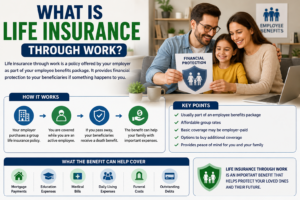
Life insurance through work is employer-sponsored coverage that helps provide financial protection for employees and their families
How Employer-Sponsored Life Insurance Works
Employer-sponsored life insurance is based on a group insurance concept. The employer, instead of buying each employee’s policy individually, buys coverage for a group of workers under a master policy.
The insurance company’s premiums are typically lower than those of private individual life insurance policies because they cover many people simultaneously.
The typical process is as follows:
The employer chooses an insurance company.
Eligibility to become an employee is determined by the company’s requirements.
3. The coverage can be automatic or optional.
The premiums are paid by the employer, employee, or both.
If the employee dies while covered, then the beneficiaries will receive the death benefit.
Employers often provide a basic life insurance plan that is automatically paid for by the employee (and possibly the employer). In addition, employees may be able to purchase supplemental life insurance for additional coverage.
There are several types of life insurance available through work.
There are several types of employer-sponsored life insurance. Understanding the distinctions can help staff members assess the extent of their protection.
Basic Life Insurance Coverage
The most common type of workplace life insurance is basic.
This coverage is typically:
The employer fully pays for the training
• Automatically provided
Equal to the wages of an employee for one year/2 years of an employee’s annual wages
For example:
• If an employee earns $60,000 per year, the employer may provide a $60,000 or $120,000 death benefit.
Basic life insurance is a workplace benefit that can be a desirable option for workers, as they do not need to pay a separate premium.
But this may not be sufficient to meet a family’s long-term needs.
Supplemental Life Insurance
Employers often provide supplemental life insurance that allows employees to purchase additional coverage beyond the policy limits.
The premiums are usually deducted from employees’ payroll.
Workers might be able to:
• Increase death benefits
• Add spouse coverage
Insure your children or dependents. Cover youngsters or dependents with insurance.
• Customize protection levels
Additional policies may be helpful for:
• Married individuals
• Parents with children
• Homeowners
• People with large financial responsibilities
The benefits include convenience and group pricing, but the cost may increase with age.
Accidental Death and Dismemberment (AD&D) Coverage
Some employers offer AD&D insurance as a workplace benefit.
AD&D benefits are paid if:
• The employee dies in an accident
The employee is gravely injured, for example, losing a limb, eyesight, hearing, etc.
This coverage is not part of a life insurance policy and only covers certain accidents.
Although AD&D might offer additional coverage, it should not be used to replace traditional life insurance coverage.
Dependent Insurance
Dependent Insurance lets employees buy life insurance for spouses and children.
This insurance can assist families in paying for:
• Funeral expenses
• Emergency costs
• Unexpected financial burdens
Dependent insurance typically provides less coverage than an employee policy, but it can be beneficial during tough times.
Who is covered by the Employer Coverage?
Qualification requirements differ among employers and insurance companies.
The majority of companies need workers to:
• Work full-time
Follow the lead and wait until the end.
Keep working in an active status.
Some employers will also cover:
• Part-time workers
• Remote employees
• Union workers
• Seasonal staff
Eligibility often begins:
• Immediately upon hiring
• After 30 days
Once you have worked for 60-90 days.
The company benefits handbook should be read carefully to make sure that employees understand:
• Enrollment deadlines
• Coverage limits
• Optional upgrades
• Dependent insurance availability
Why Employers Offer Group Insurance
One of the most important employee benefits in the United States is life insurance.
There are a number of reasons why employers offer group insurance:
Attracting Skilled Employees
Competitive benefits help attract great employees to a company.
A good benefits package can include:
• Health insurance
• Retirement plans
• Paid leave
• Employer-sponsored life insurance
Those looking for a job might conduct a cost-benefit analysis before accepting an offer.
Improving Employee Retention
Employees are more likely to stay with companies that provide financial security and family protection benefits.
Working life insurance generates:
• Loyalty
• Stability
• Employee satisfaction
Assisting with Employee Financial Wellness
Many employers realize that financial stress impacts productivity and mental well-being.
Employer coverage adds to workers’ confidence in their families’ future.
Tax benefits for enterprises.
Employers can benefit from tax advantages through offering a group insurance program.
This can make employer-provided life insurance a cost-effective benefit for employers and an affordable option for their employees.
The benefits of Group Insurance Pricing are:The benefits of Group Insurance Pricing are:
Affordability is a key reason that employees like life insurance through their jobs.
Employers negotiate coverage for large groups:
There is a lower premium cost.
Medical exams are subject to reduction.
• Approval is easier
Group insurance provides a form of risk sharing among employees, enabling insurers to offer lower quotes.
This is particularly valuable for coverage in the workplace:
• Young workers
Employees who have medical conditions.
• First-time insurance buyers
Employer-provided group life insurance can be an option for workers who may not qualify for private life insurance.
Workplace Life Insurance Common Coverage Amounts
Employer-sponsored life insurance policies are typically structured in the standard way.
Common examples include:
• Flat coverage amounts ($25,000–$50,000)
• One-time annual salary
Double annual income. Double the yearly wage.
Supplemental coverage options up to several hundred thousand dollars
These amounts may appear substantial, but financial experts recommend that the amount of coverage be equivalent to:
• 10–15 times annual income
This will leave many employees needing some private life insurance cover at some point in the future.
Understanding Beneficiaries
Staff must select beneficiaries on their life insurance policies.
The beneficiary is the person who receives the death benefit upon the insured employee’s death.
Common beneficiaries include:
• Spouses
• Children
• Parents
• Siblings
• Trusts
After any of the following updates, it is important to update beneficiaries regularly:
• Marriage
• Divorce
• Birth of children
• Major life changes
The failure to keep beneficiary information up to date can lead to legal and financial hassles.
Employer-sponsored life insurance: a final word
Among the most valuable employee benefits in the USA is employer-sponsored life insurance. It provides low-cost financial security, a straightforward sign-up process, and protection for millions of workers and their families.
Group insurance can be a great starting point for financial security, particularly for new workers entering the workforce or those who cannot afford substantial policies.
But it’s important to grasp how employer coverage works before assuming it fully. Workplace insurance may not be sufficient because of coverage limits, portability concerns, and family requirements.
The article describes seven advantages and disadvantages of life insurance that is offered through the workplace.
7 Great Advantages of working with life insurance
In the U.S., one of the most valuable employee benefits is employer-sponsored life insurance. For many workers and families, the benefits of employer-sponsored life insurance include a sense of security, peace of mind, and financial protection during hard times.
One of the reasons workplace life insurance is so popular is that it’s convenient, affordable, and easy to access when private policies aren’t. Group insurance plans may offer employees greater coverage at lower costs, easier enrollment, and added family coverage benefits.While there are some restrictions, employer coverage offers significant benefits that can help workers provide for their families and build a better financial future.
Let’s take a look at the 7 great advantages of life insurance through work and why millions of Americans use their employer-sponsored coverage as a component of their financial strategies.

Discover 7 great advantages of working with life insurance and why millions of Americans use it as part of their financial planning strategy.
Affordable Group Insurance Rates
The greatest benefit of a workplace life insurance plan is its affordability.
Group insurance plans are typically the way employer-sponsored life insurance is provided, with the insurance company’s policy covering several employees. This is because the risk is shared by a large population, allowing insurance companies to offer lower premium rates than with individual private life insurance policies.
This results in a number of financial advantages for the workers:
• Lower monthly premiums
• Reduced administrative costs
Improved access to low-cost coverage.Better access to affordable coverage.
Prices are improved by employer negotiations.
Group insurance is usually a cost-effective alternative to obtaining life insurance coverage, and yet younger employees or families with limited budgets find it to be an affordable way to get coverage.
Why Group Insurance Costs Less
Insurance companies set premiums based on risk. Insurers can see more clearly how risky an employer is in cases involving hundreds or thousands of employees who must be covered.
This enables the insurance companies to:
• Reduce pricing
• Offer simplified underwriting
Reduce the expenses of individual employees.
The coverage may also be even more affordable for the employer, as they can cover part or all of the premium.
Helpful for Families
Covering the workplace is particularly beneficial to:
• Parents
• Married couples
• New homeowners
• Employees supporting dependents
Financial constraints may mean that many families would not consider buying life insurance without it. Employer coverage goes a long way toward filling the gap by providing financial protection.
Easy Qualification Process
Another significant advantage of employer coverage is that enrollment is much easier.
Private life insurance policies may have specific requirements such as:
• Medical exams
• Blood tests
• Health questionnaires
• Financial reviews
Some employer-sponsored group insurance plans offer guaranteed issue and may be simplified underwritten.
This can mean employees can qualify without undergoing extensive medical testing.
Guaranteed Issue Coverage
Guaranteed issue life insurance is a form of insurance provided to eligible employees who do not have to pass a physical exam.
This can be quite useful for individuals suffering from:
• Diabetes
• High blood pressure
• Heart conditions
• Past medical issues
Many employees who may have difficulties in securing private insurance may still be able to get employer-provided insurance.
Faster Enrollment
The registration process is typically straightforward and speedy.
Employees may:
Sign up for Onboarding
Register during the open enrollment time
Online selection of coverage using HR systems
The ease of access makes life insurance more accessible for overworked employees who might otherwise postpone coverage.
Employer-Paid Basic Coverage
Employers often offer employees basic life insurance at little or no cost.
One of the most appealing aspects of life insurance purchased through one’s employer is that workers receive immediate financial protection without having to pay monthly premiums separately.
The most frequently used amounts of coverage for employers.
Employer-paid policies include:
• $25,000 flat coverage
• $50,000 flat coverage
• One-time annual salary
Two years is equal to an annual salary.
For example:
A worker who makes $70,000 per year can receive $70,000 in death benefits without raising their wages.
While this may not be a total substitute for the family’s income, it can assist them in paying for:
• Funeral expenses
• Emergency bills
• Short-term living costs
• Debt obligations
Valuable Employee Benefit
Employer-paid life insurance shows employers care about employees’ financial wellness and the security of their families.
Some workers value workplace benefits because they:Workers value workplace benefits for the following reasons:
Lowering the stress on the finances of individuals
• Automatic basic protection
Provide comfort to family and friends
Payroll deduction payments (convenient)
Workplace life insurance is also easy to administer.
The cost of supplemental life insurance and dependent insurance is usually automatically deducted from an employee’s paycheck.
This has a number of benefits:
• Easy budgeting
No need to pay separate monthly bills.
The risk of missed payments is minimized. There is less risk of late payment.
• Simplified policy management
Maintaining coverage is much easier than paying private coverage premiums each month, since it is done automatically.
Supports the provision of continuous coverage.
One of the most common reasons life insurance policies lapse is missed payments.
Payroll deduction systems help employees:
Make sure to keep payments up to date.
• Maintain uninterrupted coverage
Don’t let your policy lapse by accident. Don’t let your policy expire by mistake.
This is particularly useful for a family with lots of bills and other responsibilities.
Access to Supplemental Life Insurance:
Some companies offer supplemental life insurance coverage in addition to the employer-provided coverage.
Supplementary cover provides employees with the chance to:
• Increase death benefits
• Expand financial protection
Suitable for the personal requirements of the family
This is especially important because employer-sponsored policies frequently do not go far enough to adequately support families over time.
What is the need for supplemental coverage? What is the reason for supplemental coverage?
Financial advisors suggest life insurance be based on:
• 10–15 times annual income
Some simple rules of the workplace may be included:
• One or two times annual salary
Supplemental insurance can fill this insurance gap.
Great for big money considerations.
The supplemental employer coverage is advantageous to the employees who have:
• Mortgages
• Young children
• Student loans
• Dependents
• Single-income households
Higher levels of coverage can help families maintain financial stability after their main breadwinner is gone.
Convenient Enrollment
Supplemental Insurance at work differs from private insurance in that it may:
Applies for a loan with minimal medical documentation required
• Offers group pricing
• Uses payroll deductions
This makes it easy and accessible to expand coverage.
Dependent Insurance Options
Some employer-sponsored life insurance plans also provide dependent insurance coverage for spouses and children.
Dependent insurance will help protect families if they have additional costs associated with:
• Funeral costs
• Medical bills
• Emergency financial needs
While typically a lower coverage amount than an employee policy, dependent policies can be a valuable source of financial support during emotional and stressful times.
Spouse Coverage
If your family depends on the income from a spouse’s life insurance, there are several types of life insurance that can provide you protection:
• Dual incomes
• Shared financial responsibilities
• Childcare support
Stay-at-home spouses also make important contributions financially via:
• Childcare
• Household management
• Family support
It may be costly to replace these services after a loss.
Child Life Insurance
Some employers also offer child life insurance.
These policies can help families cope with: although no amount of money can replace a child.
• Funeral expenses
• Counseling costs
Time out of work
Child policies are typically low-cost and simple to incorporate into the employer’s benefit plan.
Peace of Mind for employees and families
Peace of mind may be the best thing to come from working through a company.
Giving loved ones financial support after an unexpected death can help ease anxiety and offer emotional comfort.
With employer-sponsored life insurance, families can feel more secure in their finances as they access life insurance to provide for:
• Funeral arrangements
• Mortgage payments
• Household bills
• Education costs
• Debt repayment
• Daily living expenses
Emotional Security
When times are tough, financial worries can be a major stress.
Life insurance provides reassurance that:
Families will receive financial assistance.
Family and friends will not suffer financial harm in the short term.
There are still key responsibilities that can be met.
Useful In Emergency Situations
There’s no telling when tragedy can strike.
Workplace life insurance provides a valuable financial safety net to safeguard:
• Spouses
• Children
• Parents
• Dependents
Some minor employer coverage can help during an emergency.
Millions of Americans rely on employer coverage, and for good reason.
There’s a reason why millions of Americans rely on employer coverage.
Life insurance that is purchased through the workplace continues to be among the most prevalent Life Insurance in the USA as it combines:
• Affordability
• Accessibility
• Convenience
• Family protection
Workplace coverage is a core component of most workers’ financial security plans.
It offers:
Affordable group insurance rates
• Easy enrollment
• Employer-paid benefits
• Supplemental protection options
• Dependent insurance opportunities
• Automatic payroll deductions
Great piece of mind.Very helpful piece of mind.
But although there are many benefits to having employers cover you, there are also drawbacks that must be considered.
Employee benefits plans come in many forms, including life insurance. Employee benefits plans are available in a variety of different forms; life insurance is one such example.
Highlights of the Upcoming New Regulations
Work-based life insurance provides important financial security for millions of American workers. One of the most sought-after workplace benefits these days is affordable, convenient, and easy employer-sponsored group insurance options.
Although there are numerous benefits to employer coverage, there are also significant drawbacks that employees need to be aware of. Many people think their work-based life insurance policy provides adequate coverage for the long term, but then find out it lasts only a specified period or is insufficient to meet their family’s financial needs.It’s important to be aware of these restrictions when creating a financial protection plan. In this part of the lesson, we will examine the significant disadvantages of employer-sponsored life insurance and private life insurance, and how an employee can make better long-term insurance choices.
Coverage May Not Be the Only Thing That Matters.
The first issue with employer-sponsored life insurance is that plans are usually inadequate to cover a family’s needs.
Most employers provide:
Title 1 funding is based on an individual’s annual salary.
The annual salary is twice that figure. The annual salary is half the above.
• Flat coverage amounts between $25,000–$50,000
This is a substantial amount of money, but it is typically far less than most families need.
Why Small Policies Can Be Risky
Financial experts typically say that life insurance coverage ought to be:
• 10–15 times annual income
For example:
A worker with an annual income of $80,000 might require $800,000–$1.2 million in total life insurance coverage.
If the employer only provides:
• $80,000–$160,000 coverage
May be a significant financial shortfall.
Expenses Families Still Have to Pay
Families may also have to cover the cost of:
• Mortgage payments
• Childcare
• Education expenses
• Medical bills
• Credit card debt
• Funeral costs
• Daily living expenses
If left uncovered, surviving family members may face financial difficulties.
Most health plans will terminate coverage after you no longer have employment.
One of the biggest drawbacks of employer coverage is that it’s tied directly to work.
In most cases, life insurance coverage that comes from an employer will terminate at the end of employment:
• You quit your job
• You are laid off
• You retire
• A change of providers by your employer
This can be a big danger when making career changes.
What’s the problem with this? Why is this a risk?
Employer-sponsored life insurance is often lost at just the wrong time.
For example:
Lack of work while sick
• Early retirement
A career shift in adulthood.Career transitions after age 20.
Older workers could be liable to:
An increase in the price of private insurance premiums.
• Health-related underwriting problems
• Limited coverage options

Small issues may seem manageable now, but without proper planning, they can lead to:
❌ Financial hardship
❌ Stress and uncertainty
❌ Debt problems
❌ Loss of long-term security
❌ Family financial struggles
Portability & Conversion Options
Some employers will permit employees to:
Convert group insurance to private insurance policies
• Continue coverage temporarily
However:
There is a potential for substantial cost increases.
Even though coverage might be high, it may be limited
• Deadlines often apply
There are always two things employees are to be aware of:
• Portable policy, or not
How to handle the end of employment.
• Conversion eligibility rules
Limited Customization Options
Employer life insurance policies are not suited to individuals’ financial requirements.
This means that workers are typically limited in their control of:
• Policy structure
• Coverage amounts
• Riders and add-ons
• Long-term flexibility
Employer Controls the Plan
The employer will normally select:
• The insurance company
• Coverage levels
• Policy terms
• Optional benefits
Generally, employees have limited flexibility to adjust policies, unlike in private life insurance.
Missing Features
A lot of work plans don’t provide:
• Cash value accumulation
• Flexible premium options
Permanent life insurance is characterized by the following features:
Advanced estate planning tools.
Individuals with complex financial needs may need more customized private policies.
The expense of supplemental coverage can add up.
While it may seem inexpensive to buy a life insurance plan through your employer, the premiums may increase as time goes on.
There are many supplemental group insurance plans that add cost as employees get older.
This means:
• Younger employees may receive very low wages
Steep premium increases may be necessary for older employees.
Age-Based Pricing
As workers shift to the higher age cohorts:
Your monthly payroll withholdings could go up.
The cost of coverage can increase.
When things like this happen, some employees are taken aback:
As they get older, premiums double or triple.
Comparing Private Insurance
Young and healthy individuals who buy their own life insurance products might:
Secure more favorable long-term rates
Provide permanent coverage that is stable
Provide more policy control
This is why many financial advisors recommend:
This means all employers in a group could cover their employees with a single insurance policy, or they could use a group policy alongside private insurance.
Dependent Insurance may be limited.
Work-based insurance coverage for spouses and kids is usually limited, but can be valuable.
Typical dependent policies may only offer:
• $5,000–$25,000 for spouses
• Smaller child coverage amounts
These policies can protect one’s finances in the short term, but do not provide long-term protection.
There are reasons why families might require further policies.
Families with:
• Young children
• Large mortgages
• Single-income households
• Significant debts
May need significantly higher private life insurance policies.
Stay-at-Home Spouses are Also in Need of Protection
Often, people who do not work outside the home do not realize they have a monetary value.
Replacing services such as:
• Childcare
• Transportation
• Household management
It can be very costly after suffering the loss.
Other private coverage may help families be better prepared for these circumstances.
Most Group Policies have no cash value.
The majority of work-based life insurance plans are term life insurance plans.
This means:
Covering period is limited to during work hours
Policies typically do not accrue cash value
While group insurance can be similar to permanent life insurance in some ways, it will not typically be able to:
• Accumulate savings
• Build investment value
• Offer loans based on the policy’s value
There are two types of insurance: term and permanent.
Group Term Insurance
• Temporary protection
• Lower cost
• No investment component
Permanent Insurance
• Lifelong coverage
• Cash value growth
• More expensive premiums
When employees need a long-term planning tool, it may be time to use a private life insurance policy.
To enforce employer control of insurance policies.
Another drawback is that the employees are not the policyholders of the group insurance policy.
The employer will own the master policy and will be able to:
• Change insurance companies
• Reduce benefits
• Modify coverage terms
• Eliminate coverage entirely
This out-of-control situation can lead to uncertainty.
There are times when coverage changes can occur unexpectedly.
Employers may:
Cutbacks in benefits – reduce benefits during budget cuts
• Change eligibility requirements
Reduce employee benefits costs by increasing their insurance premium contributions.
These decisions are typically beyond employees’ control.
The difference between an employer’s coverage and private life insurance.
It’s important to understand the distinction between employer-sponsored and private life insurance to make informed financial choices.
Group Life and Disability Insurance Yes Yes Yes
I own my policy. Employer controls my policy.
High school diploma, certificate, or certificate of completion. After high school, I got a job. Still working.
Customization: Limited, highly customizable
Maintenance may be lower in the beginning, but varies with age & health
Usage: Usually none. Conventional policies: Available in permanent policies
New criteria for the determination of the stability of 1031 exchanges.New rules for determining the stability of 1031 exchanges.
Why do many Americans use both types of coverage
Many financial advisers say that it is best to pair up:
• Employer-sponsored life insurance
• Private life insurance
This approach provides:
• Affordable workplace protection
• Long-term independent coverage
• Greater financial security
Layered Protection Strategy
A layered approach can involve:
• Free employer-paid coverage
• Supplemental workplace insurance
• Private term life insurance
Permanent life insurance for long-term planning.
This will help families manage financial risks associated with:
• Job loss
• Retirement
• Coverage limitations
Should You Purchase extra Life Insurance past Work?
It all depends on your financial condition.
If: Employer Coverage is enough:
You are:
• Single
• Debt-free
• Without dependents
• Financially stable
The small-employer policies may be adequate as temporary protection.
If: Additional Private Insurance May Be Necessary:
You have:
• Children
• A spouse
• Mortgage debt
• Student loans
• Long-term financial obligations
A private life insurance policy can offer more security and stability.
How to Take Advantage of the Best Life Insurance Options for the Workplace
Staff should do their own work to enhance their financial security.
Knowing that the review will happen every year.
Life changes quickly.
Review your:
• Salary
• Family needs
• Debts
• Dependents
In particular, during the open enrollment periods.
Update Beneficiaries Regularly
Update beneficiaries after:
• Marriage
• Divorce
• Birth of children
• Major life changes
Older beneficiaries can cause issues down the road.
Understand Policy Portability
Ask HR:
Can coverage be continued following the leave?
• Are conversion options available?
• What deadlines apply?
Investigate Supplemental/Private Coverage
Other protective measures can lead to greater economic stability for families.
Common mistakes to avoid
Many employees make costly life insurance blunders.
Avoid:
Using employers’ insurance only.
Not taking advantage of additional insurance opportunities.
• Forgetting beneficiary updates
Too delayed in purchasing private coverage
• Assuming workplace insurance lasts forever
Making plans early typically offers:
• Lower premiums
• Better eligibility
• Stronger financial protection
Final Thoughts
One of the most beneficial employee benefits in the USA is life insurance. Employer-sponsored group insurance coverage offers low cost, easy enrollment, and crucial financial support for millions of families.
But there are drawbacks to workplace coverage as well. The insurance amounts and coverage may be very low, policies are typically terminated at the point of employment, and employees typically lack control over their insurance options.
It is important to know what the pros and cons of employer coverage are so that you can make sound financial decisions.Combining, for many families, is the best solution:
✔️ Employer-sponsored life insurance
✔️ Supplemental group insurance
✔️ Private life insurance policies
This multi-layer security can offer enhanced financial security and increased peace of mind for your loved ones.
Regular review and planning can help you build a more secure financial future and ensure your family is protected, no matter what life throws your way.